Friday, 5 July 2013

Widescreen Aspect Ratios Composition Techniques effect "Mise en scene"


Martin Scorsese once famously asked, “How do you frame a close up with widescreen?” This was a common criticism when widescreen first became popular. The beauty of 4×3 Acadmey Ratio is how it beautifully fits a human face. 16×9 and 1.85 are still relatively conducive to closeups but once you start getting into the 2.35 and above range, there’s a lot of wasted screen real estate in a full face closeup. Sometimes you’ll want that emptiness…
But sometimes you may want to use a technique of crafting your own specialized spaces inside your frame. The traditional word for this is mise-en-scene – literally placing on stage. By carefully composing your shot with a mix of foreground and background objects you can make really cinematic composition.
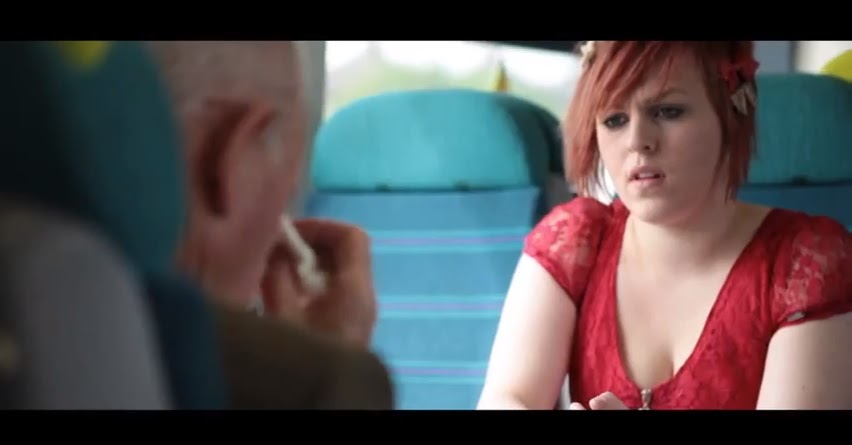
The most basic example is in shooting a face-to-face two person dialogue scene.
My work Train station farewell
Here we used the back of an actor’s head to reduce the size of the space we’re using to frame the other actor speaking. Even though we’re shooting here with a 2.35 aspect ratio, the area of interest is significantly smaller. This technique of including unwanted elements is also called “Dirtying up the frame”
You can also use architectural elements to do this using walls to create natural boarders.
One of my favorite techniques is using doorways as in this Godfather inspired sequence. Notice the walls and door way                            
used to break apart the shot.
This Mis-en-scene approach to composition is really made possible by the widescreen aspect ratios. Orson Welles started the trend in Citizen Kane with his unique blocking but it became much easier when filmmakers had a wider canvas to work on. Generally speaking The wider your screen the more you should incorporate mis-en-scene in your compositions and rely less on montage (cutting) – or don’t. It’s up to you.
Just as with every choice in filmmaking, the choice of which aspect ratio to use and how you compose your shots all demand compromise. Be aware of your options, experiment, learn how these things affect your story telling and then make a choice – make something great.

A very useful resource about film - The History of Aspect Ratio


"WIDESCREEN"


I find this imaging history flashback last week and i have been shocked about how original 
filmmaker developing the technique. some is physics make up and some is new technique.  
when i first time see widescreen they use three camera to  make “panorama” shooting at same time. and i also notice mise en scene developing during the same time. 

Aspect Ratio is a fundamentally simple concept with a deep and important history.Simply put, the aspect ratio is the ratio of the width of the image to the height. This can be expressed as two numbers like 4×3 or 16×9 or as a decimal such as 1.85 and 2.35 – though these can be written as a ratio as in 2.35:1.

We owe the first aspect ratio to one man: William Kennedy Dickson. Dickson worked at Thomas Edison’s Lab as a staff photographer. After Eastman Kodak began mass producing flexible film in the early 1890s, Thomas Edison wanted to put this new film to use in a device called a Kinetescope – the precursor to the projected film. After a few years of start and stop experimentation, they finally arrived at a working prototype.

Using 35mm film Dickson settled on an image that was 4 perforations high – resulting in an image that was .95” by .735” – a 4:3 aspect ratio – or 1.33

We really don’t know why William Dickson settled on 4 by 3 but it stuck. In 1909 the Motion Picture Patent Company (a trust of major American film companies who were all practically under the thumb of Thomas Edison himself) declared that 35mm film with Edison perforations, and 4×3 aspect ratio with an image 4 perforations high as the standard for all films that were to made and shown in the US. This settled it – making film and projection ubiquitous across the United States.

And for a whole generation, everything stayed pretty much the same. When synchronized sound came in the scene in 1929 and optically printed on the film itself as a strip that ran along side of the image, there was a slight shift in the aspect ratio.

In 1932, the Academy of Motion Picture Arts and Sciences voted on and declared that in order to make room for the sound track, the image should be masked off on the top and bottom for a 1.37 aspect ratio (so close to 1.33 that it’s sometimes used interchangeably). This image size would be called the Academy Ratio and it remained the standard in Hollywood for yet another generation of movie goers.

The 1950s was a tumultuous time for film, the industry was forced to restructure and decade saw the rise of Film’s little brother – Television. Since everybody alive at that time had been going to theaters and watching films in 4×3 aspect ratio- it was only natural that television would carry over that same screen shape.  Like a new sibling in the Entertainment family, TV was getting all the attention and that reflected in smaller movie going audiences.

Mise en scene test 1


A little mise en scene test done last two weeks ago. the results from people is not very perfect. 22 people  have finish the survey. most people are not really understand the questions and also i put to many thing at same time, such as acting, prop, location setting , lighting. a lot people can not focus on too many things. they just can concentrate on one thing. also i learned from this time is find the right people to do the survey. this time 22 people only 5 people who can understand film in Professional way, the Rest Of The people is none professional film people.

Michael Rabiger suggestion make a brief content description of each scene, annotate it with how you want the audience to feel about it, and you have a firm beginning. turn the list into a colored graph or storyboard to show what the audience should feel from scene to scene, and then you can think about how the storyteller must tell the tale to make this happen. once you have an overall strategy, you can design individual scenes. 

i will do the another test as soon as possible.

Friday, 21 June 2013

Raw video?? Get RAW on a 5D mark III with Magic Lantern

i going to test raw video for 25th to 30th of June and if it totally useable i will use it as my main format for the final work.
Getting the firmware and RAW module onto the camera:
1. Get a 5D mark III with a fully charged battery. If you buy a mark III, please get it
___HERE. We did it on a Mac with a Transcend card reader, a 16GB SD card and one of
___the fast Komputerbay CF cards (fast read/write required. You get 25 minutes of 1080p
___on a 128GB card).
Note that there’ve been numerous people who didn’t achieve the same resolution with their 128GB Komputerbay CF cards. There seem to be inconsistencies in different batches. Apparently the Komputerbay 64GB are consistently faster to achieve the 1080p at 25fps. Europeans can get the cards here: LINK
If your Komputerbay card is too slow you should send it back and get a replacement. If money is no issue you can save the trouble by getting one of the Lexars which have the same internals with better quality control, but cost almost 4 times as much: LINK

The Hoodman Steel is also said to be a very fast 1000x card.
2. If you’re on Canon 5D mark III firmware 1.2.1 (latest) downgrade it to the
___compatible 1.1.3. Firmware. Links:
___OSX: LINK (thanks to user Kobus)
___WIN: LINK
3. Format the SD card (up to 16GB) in camera. Make sure the dial is always on “M” (manual mode)
4. Get the whole Magic Lantern package –> download the “Magic Lantern June 17…” file.
___ (link updated June 19th) (posted in the Magic Lantern forum)
5. From the Magic Lantern package copy the 5D3-113-bootflag.fir file to the root folder
___of the SD card.
6. Place the SD card in your camera, switch it on and go to the firmware update in the
___camera menu. Do the update which will “turn” your camera’s bootflag. Whatever that
___means.
7. The camera now loads weird overlays, wait until it’s finished. Switch the camera off.
8. Get the SD card back in the Computer. DELETE 5D3-113-bootflag.fir file from the SD!
9. Copy the autoexec.bin and “ML” folder onto the SD card.
10. Download Macboot and the Mountain Lion fix (if you’re on a Mountain Lion Machine)
___(for Windows see here: LINK).
11. Open only the “.command” file (for Mountain Lion) and insert your password in the
___Terminal window that pops up.
12. The Macboot app should open. Select “DSLR Bootable” and press “prepare card”.
___It should now display a “success” note.
13. Click “Eject Card”.
14. The SD card goes back into the 5D mark III together with the Komputerbay CF card.
15. Switch camera on.
16. Now press the “trash button” on the camera to activate Magic Lantern. The Magic
___Lantern menu should load.
16B. If it didn’t work try step 5 again. And make sure mode dial is on “M” and your
___camera is set to movie recording (red camera symbol on back of your 5D).
17. Go to “M” Symbol in the Magic Lantern menu (on the far right).
18. Select “Load Modules”. Now you should see “raw_rec ok” with a green dot next to it.
19. Go to the menu with the camera symbol.
20. Select the “RAW video” tab. And then press the “Q” button to access it.
21. Set your width and height to be “1920×1080″ for HD recording.
22. Exit the menu by pressing the “trash button” again. Set your desired framerate in the
___Canon menu. (25p also works now!)
23. To record go about as usual, press the “start/stop” button.
24. You will see the camera capturing (or dropping) frames…

Summarize15 Golden Rules of Moviemaking from Danny Boylev

1. A DIRECTOR MUST BE A PEOPLE PERSON • Ninety-five percent of your job is handling personnel. People who’ve never done it imagine that it’s some act, like painting a Picasso from a blank canvas, but it’s not like that. Directing is mostly about handling people’s egos, vulnerabilities and moods. It’s all about trying to bring everybody to a boil at the right moment. You’ve got to make sure everyone is in the same film. It sounds stupidly simple, like ‘Of course they’re in the same film!’ But you see films all the time where people are clearly not in the same film together.
2. HIRE TALENTED PEOPLE • Your main job as a director is to hire talented people and get the space right for them to work in. I have a lot of respect for actors when they’re performing, and I expect people to behave. I don’t want to see people reading newspapers behind the camera or whispering or anything like that.
3. LEARN TO TRUST YOUR INSTINCTS • Ideally, you make a film up as you go along. I don’t mean that you’re irresponsible and you’ve literally got no idea, but the ideal is that you’ve covered everything—every angle—so that you’re free to do it any of those ways. Even on low-budget films, you have financial responsibilities. Should you fuck it up, you can still fall back on one of those ways of doing it. You’ve got Plan A to go back to, even though you should always make it with Plan B if you can. That way keeps it fresh for the actors, and for you.
4. FILM HAPPENS IN THE MOMENT • What’s extraordinary about film is that you make it on the day, and then it’s like that forever more. On that day, the actor may have broken up with his wife the night before, so he’s inevitably going to read a scene differently. He’s going to be a different person.
I come from theater, which is live and changes every night. I thought film was going to be the opposite of that, but it’s not. It changes every time you watch it: Different audiences, different places, different moods that you’re in. The thing is logically fixed, but it still changes all the time. You have to get your head around that.

5. IF YOUR LAST FILM WAS A SMASH HIT, DON’T PANIC • I had an obsession with the story of 127 Hours, which pre-dated Slumdog Millionaire. But I know—because I’m not an idiot—that the only reason [the studio] allowed us to make it was because Slumdog made buckets of money for them and they felt an obligation of sorts. Not an obligation to let me do whatever I want, but you kind of get a free go on the merry-go-round.
6. DON’T BE AFRAID TO TELL STORIES ABOUT OTHER CULTURES • You can’t just hijack a culture for your story, but you can benefit from it. If you go into it with the right attitude, you can learn a lot about yourself, as well as about the potential of film in other cultures, which is something we tried to do with Slumdog Millionaire… Most films are still made in America, about Americans, and that’s fine. But things are changing and I think Slumdog was evidence of that. There will be more evidence as we go on.
7. USE YOUR POWER FOR GOOD • You have so much power as director that if you’re any good at all, you should be able to use that to the benefit of everyone. You have so much power to shape the movie the way you want it that, if you’re on form and you’ve done your prep right and you’re ready, you should be able to make a decent job of it with the other people.
8. DON’T HAVE AN EGO • Your working process—the way you treat people, your belief in people—will ultimately be reflected in the product itself. The means of production are just as important as what you produce. Not everyone believes that, but I do. I won’t stand for anyone being treated badly by anyone. I don’t like anyone shouting or abusing people or anything like that. You see people sometimes who are waiting for you to be like that, because they’ve had an experience like that in the past, but I’m not a believer in that. The texture of a film is affected very much by the honor with which you make it.
9. MAKE THE TEST SCREENING PROCESS WORK FOR YOU • Test screenings are tough. It makes you nervous, exposing the film, but they’re very important and I’ve learned a great deal from using them. Not so much from the whole process of cards and the discussions afterwards, but the live experience of sitting in an auditorium with an audience that doesn’t know much about the story you’re going to tell them—I find that so valuable. I’ve learned not so much to like it, but to value how important it is. I think you have to, really.
10. COME TO THE SET WITH A LOOK BOOK • I always have a bible of photographs, images by which I illustrate a film. I don’t mean strict storyboards, I just mean for inspiration for scenes, for images, for ideas, for characters, for costumes, even for props. These images can come from anywhere. They can come from obvious places like great photographers, or they can come from magazine advertisements—anywhere, really. I compile them into a book and I always have it with me and I show it to the actors, the crew, everybody!
11. EVEN PERFECT FORMULAS DON’T ALWAYS WORK • As a director your job is to find the pulse of the film through the actors, which is partly linked to their talent and partly to their charisma. Charisma is a bit indefinable, thank God, or else it would be prescribed in the way that you chemically make a new painkiller. In the movies—and this leads to a lot of tragedy and heartache—you can sometimes have the most perfect formula and it still doesn’t work. That’s a reality that we are all victims of sometimes and benefit from at other times. But if you follow your own instincts and make a leap of faith, then you can at least be proud of the way you did it.
12. TAKE INSPIRATION WHERE YOU FIND IT • When we were promoting Slumdog Millionaire, we were kind of side-by-side with Darren Aronofsky, who was also with Fox Searchlight and was promoting The Wrestler. I watched it and it was really interesting; Darren just decided that he was going to follow this actor around, and it was wonderful. I thought, ‘I want to make a film like that. I want to see if I can make a film like that.’ It’s a film about one actor. It’s about the monolithic nature of film sometimes, you know? It’s about a dominant performance.
13. PUSH THE PRAM • I think you should always try to push things as far as you can, really. I call it “pushing the pram.” You know, like a stroller that you push a baby around in? I think you should always push the pram to the edge of the cliff—that’s what people go to the cinema for. This could apply to a romantic comedy; you push anything as far as it will stretch. I think that’s one of your duties as a director… You’ll only ever regret not doing that, not having pushed it. If you do your job well, you’ll be amazed at how far the audience will go with you. They’ll go a long, long way—they’ve already come a long way just to see your movie!
14. ALWAYS GIVE 100 PERCENT • You should be working at your absolute maximum, all the time. Whether you’re credited with stuff in the end doesn’t really matter. Focus on pushing yourself as much as you can. I tend not to write, but I love bouncing off of writing; I love having the writers write and then me bouncing off of it. I bounce off writers the same way I bounce off actors.
15. FIND YOUR OWN “ESQUE” • A lesson I learned from A Life Less Ordinary was about changing a tone—I’m not sure you can do that. We changed the tone to a kind of Capra-esque tone, and whenever you do anything more “esque,” you’re in trouble. That would be one of my rules: No “esques.” Don’t try to Coen-esque anything or Capra-esque anything or Tarkovsky-esque anything, because you’ll just get yourself in a lot of trouble. You have to find your own “esque” and then stick to it.

Monday, 13 May 2013

Learn - Is Film Dead ? by the World's Best Cinematographers


Film needs to be preserved as a capture medium because it’s one of the tools with which we’re able to tell stories. Eliminating it from the tool bag limits our storytelling potential; it’s as simple as that. Of course most of us, myself included, can’t afford to shoot film on most projects, and that’s a sad and sobering reality. But having an understanding of how and why to shoot on film is invaluable, especially in our digitally-dominated world.